

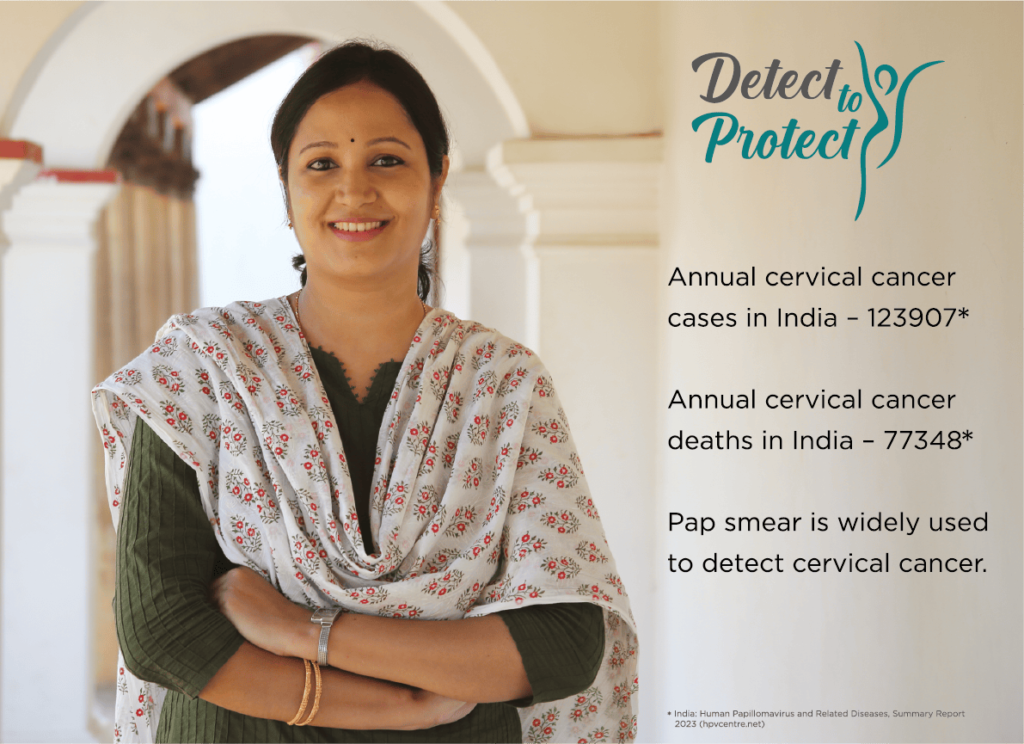
Can PAP Smear Alone Win the RACE AGAINST CERVICAL CANCER?
Diagnose cervical cancer with Rivaara HPV & LBC panel
Requires adequate cytological review
- For a high-grade lesion, the sensitivity of a single Pap smear is only 60-80%
- Up to 5% false negatives even in the best of laboratories
Does not address HPV infection
- 99% of all cervical cancers are caused by HPV
- About 10% of women with long lasting HPV infection are at risk of cervical cancer.

HPV - PCR alone does not indicate current risk.
- 90% of HPV infections resolve spontaneously
- Presence of any of the 14 high-risk types predicts the patient's risk of cervical cancer
ADVANTAGES OF LBC + PCR
| LBC – PAP | HPV – PCR | Interpretation |
|---|---|---|
| Normal | Negative | Risk of undetected cervical cancer is low. Negative predictive value ~100% |
| Normal | Positive | HPV – Infected, but no current cellular changes. Need to monitor changes at regular intervals |
| Abnormal | Positive | Refer for colposcopy for further workup |
| Abnormal | Negative | False Negative HPV PCR cannot be ruled out Review of results needed |
| Unclear | Positive | Probably early changes on Pap due to HPV Review Pap and Refer for colposcopy |
| Unclear | Negative | Changes on Pap unlikely due to HPV therefore probably unrelated to Cx cancer Repeat Pap at regular intervals |
Test Panel
| Test name | Test detail | Specimen & Contatiner |
|---|---|---|
| Cervive 5 | HPV by RTPCR | Cervical brushing in LBC container |
| Cervicare | LBC – PAP & HPV PCR | Cervical brushing in LBC container |
Also available
| GENITAL TRACT INFECTIONS PANEL | |
|---|---|
| Gardnerella vaginalis | Trichomonas vaginalis |
| Neisseria gonorrhoeae | Herpes Simplex Virus 1/2 |
| Chlamydia trachomatis | Ureaplasma urealyticum/parvum |
| Mycoplasma genitalium | |